by Thomas Balderston
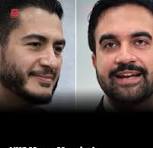
Al-Sayed (MI). Mamdani (NYC)
This is the 25th anniversary year of 9/11. Remembrance is easy; argument is not. Some Islamist and far-left voices still treat the attacks as deserved blowback—the way they treat October 7 as something Israel “had coming.” As Daniel Greenfield put it in Frontpage Magazine (Sept. 1, 2026), “Mamdani, an Abdul El-Sayed… exist because large numbers of voters agree with their pal, Hasan Piker, that America deserved 9/11.” That overstates what those candidates have said.
Piker said “America deserved 9/11” on a 2019 stream. He later walked back “deserved.” Candidates who share stages with him have had to answer for it. Abdul El-Sayed says America did not deserve 9/11 and still will not drop the alliance. Zohran Mamdani, a Muslim democratic socialist, now governs the city that was hit. Darializa Avila Chevalier, a Mamdani-backed democratic socialist and recent convert to Islam, won a New York House primary on that same left. That is legal. It is also why voters are allowed to ask what a candidate does with memory, doctrine, and power—not whether a Muslim may appear on a ballot.
American Muslims have the same legal right to hold office as anyone else. American voters have the same right to refuse them. The Constitution forbids a religious test written into law. It does not forbid a voter concluding that a political religion with a fourteen-century record of turning private law into public command should not be handed the state. That is the simpler judgment. It is also the one that has to be stated without turning every Muslim into a conspirator and without pretending the book, the Quran, on the table is a second constitution.
The standard is the same one that applies to Christian nationalists and Islamists alike: no faction may use public power to impose a sacred code on people who do not share it. To meet that standard, a candidate must pay a public price—explicitly subordinating Sharia to the secular Constitution, treating religion as a private affair, and rejecting parallel tribunals, penal codes, the legal inferiority of women, and the unbeliever as a legal category. Refusal to pay that price is not a ban. It is information.
Christianity, Judaism, Hinduism, and Buddhism contain commandments. In their ordinary American form those commandments bind the believer by conscience, congregation, and family. They are not, day to day, a ready-made code the neighbor must obey. Islam is different in structure. Sharia is not only prayer and diet. In classical jurisprudence it is a comprehensive legal order: worship, family, inheritance, speech, crime, finance, war, and the legal status of the unbeliever. Other religions in this country can be lived as voluntary. Islam’s historic political form treats many of those rules as edict.
History is not a metaphor. After Muhammad’s death in 632, Arab armies took the Levant, Egypt, Persia, North Africa, and most of Iberia in roughly a century. The justification was not only trade. It was fighting until submission and jizya. Non-Muslims became dhimmis: protected, taxed, legally inferior. Conversion was often bought with status rather than forced in every village. The political order was still Islamic.
The minority chapter and the dominant chapter are not the same book. As a minority, communities ask for judges, schools, mosques, and quiet autonomy. Hosts grant it because it keeps the peace. As numbers and institutions grow, the same tradition supplies a different program: public morality on the street, special status for Islamic norms, and, where power is sufficient, replacement of the host’s law. Europe’s fights over parallel family forums, blasphemy pressure, and official fear of the word “Islamophobia” are not seventh-century cavalry. They are not unrelated to a doctrine that never fully conceded the public square to secular law.
The United States is still in the minority chapter. Muslims are about one percent of adults. Pew’s longer projections put the share near two percent by mid-century. National majority is not the issue. Enclaves are. Dearborn, Hamtramck, parts of New York, New Jersey, Minnesota, and Michigan already move ordinances, school fights, and foreign-policy language. That is the relevant horizon.
That horizon is already visible as a shift from assimilation to separation. In Hamtramck, America’s first majority-Muslim city, an all-Muslim city council approved amplified broadcast of the adhan five times daily over objections from non-Muslim residents. In Dearborn, Mayor Abdullah Hammoud lashed out at a Christian resident who questioned a ceremonial street sign, called him a bigot, and said the day the resident left the city would be the day he launched a parade. In Minneapolis, the city council in 2023 lifted noise restrictions so mosques could broadcast the adhan year-round, including early morning and late evening hours.
Abdul El-Sayed is the 2026 Democratic nominee for Michigan’s open Senate seat. He is a physician and former Detroit and Wayne County health official. The campaign is money out of politics, lower costs, Medicare for All. He has used Sharia-compliant finance and spoken of following Sharia in his own life as an obligation before God. The campaign says he supports separation of church and state and does not want any community’s religious law written into civil law. A personal religious mortgage is not a statute banning alcohol. The question is whether Sharia is private duty or a future public claim. He denies the second. A voter who has read the doctrine is entitled to treat the denial as insufficient until he pays the public price described above.
Zohran Mamdani became mayor of New York on January 1, 2026, the city’s first Muslim mayor, sworn on Qurans. He is a democratic socialist. He says faith can supply a moral compass and government the resources, and that Muslims should know they belong in the halls of power. That is identity politics plus social democracy. It is not a municipal hudud code. Two decades after Lower Manhattan was attacked and more than 3,000 people were killed, New Yorkers elected a Muslim mayor sworn on a Quran. The book at the ceremony does not repeal Article VI. The voting record will. The post-9/11 “aunt” story was sloppy and later revised. Treat it as a reason to distrust a sentimental anecdote. Do not inflate it into a quotation he did not give.
Ilhan Omar and Rashida Tlaib used Qurans in ceremonial swearings, as Keith Ellison did before them. A similar symbolic tension occurred in Brooklyn when a newly elected Muslim civil judge took her oath on a Quran rather than a Bible. The official House oath is taken without a book. A sacred text on a table is not a competing constitution. The live question is whether communal or foreign loyalty outranks the district’s civil law. Omar has spoken to Somali audiences in Somali about confidence as Somalis, taxpaying citizenship, and protecting Somalia’s interests from Congress. Viral English renderings of one 2024 speech were contested and, in key lines, inaccurate. Use the verified translations. Do not rest the case on a disputed subtitle.
In the Quranic scripture is a permission for Muslims to lie, Taqiyya, and omit things, Kitman. Classical taqiyya is mainly concealment under persecution, especially in Shiism. Politicians lie. Name the lie. While classical taqiyya refers to self-preservation, its sister doctrine of kitman—lying by omission, evasion, and diversion—functions as a powerful political tool. In political campaigns, kitman allows a candidate to offer a lengthy, evasive answer designed to avoid the core issue while advancing their personal platform.
Foreign money is harder to wave away. Qatar and Saudi Arabia have poured billions into American universities over decades, much of it for branch campuses and Middle East studies. Those states do not treat Islam as a weekend hobby. Soft power funds the minority phase: chairs, curricula, mosques, and the habit of calling criticism bigotry. Disclosure and conditions on what may be taught are the remedy. Silence is not. This soft power has teeth; foreign donors have placed highly restrictive conditions on university grants, even sending monitors to campuses to ensure courses are taught according to their desires—a process that has led to professors being dismissed, such as at Yale, when they went off-script.
Mosques have grown with the population. The 2020 U.S. Mosque Survey counted 2,769, up from 2,106 in 2010 and from roughly 100 in 1970. Houses of worship are legal. What matters is who pays, what is taught, and whether local government begins to treat their norms as public edict. Saudi funding of institutions and teaching materials over decades is documented. Treat ownership and ideology as questions that require current evidence, not a single inherited percentage.
The mechanism is democracy, not sorcery. A concentrated community votes. It elects its own. It asks first for prayer times, halal food, zoning, holidays, and respectful language. Other groups ask for accommodations too. The line is edict: the moment the state punishes the neighbor for refusing a religious rule. A council that bans alcohol because Islam forbids it has crossed that line. A senator who will not drink because his faith forbids it has not. This line is already being tested in American municipalities. In Minneapolis, the city council passed a 2023 ordinance explicitly lifting noise restrictions to allow local mosques to broadcast the call to prayer (the adhan) over outdoor loudspeakers five times daily, despite the objections of non-Muslim residents. Meanwhile, in Houston, local imams have marched through neighborhoods confronting Muslim-owned stores, warning them that they will face severe boycotts and public protests if they refuse to stop selling pork, lottery tickets, and alcohol.
Modernity—equal citizenship, the right to leave a faith, blasphemy as speech, sex equality before the law—was not the historic desire of political Islam. Other large religions in the West underwent ruptures that demoted political supremacy. Classical Islamic jurisprudence did not. Polling in several high-population Muslim countries still shows majorities for sharia as official law and severe penalties for apostasy. The Assembly of Muslim Jurists of America, opposed to democracy, has written that democracy “gives free reign to the authority of the Ummah, and puts no ceiling on it,” while under Sharia “for things which have been stipulated in the texts of Islam, the Ummah possesses no power except to acknowledge and obey.” Later AMJA texts qualify political participation as interest-based under a citizenship covenant. Western Muslims often diverge. The gap is why concentrated settlement plus organization produces predictable pressure. That is pattern recognition, not a theory that 1.8 billion people share one mind.
“Keep Muslims out of office” is the blunt form of the prior. As a statute it is a religious test and a dead letter. As a voter’s rule it is simpler than it is precise. It wastes the only standard that can be applied to Christian nationalists and Islamists alike: no faction may use public power to impose a sacred code on people who do not share it.
Islam’s political tradition makes that test more urgent, not less, because it has never fully accepted the American settlement that religion is voluntary in the public square.
Judge the platform against that settlement. Count the votes. Follow the money. Remember what the doctrine did when it was weak and what it did when it was strong. Do not pretend the two phases are the same. Do not pretend they are unrelated. Do not give the keys to a tradition that still writes the unbeliever as a legal category unless the candidate has paid a public price for rejecting that claim. That is not a ban written into law. It is a free people declining to repeat a sequence they can already read.
To meet this standard and align with the American settlement of voluntary faith, any candidate seeking public office must be held to a rigorous, non-negotiable expectation: they must actively and publicly subordinate Sharia to the secular Constitution. In classical Islam, Sharia is the supreme constitution, rejecting any separation of mosque and state.
True reform—as championed by secular reformers and modernists—requires declaring religion to be a strictly private affair of individuals, eliminating all religiously inspired notions from public laws, and rejecting parallel Sharia tribunals. For an Islamist candidate to claim they support the Constitution while quietly maintaining that Sharia is an unalterable, divine system supreme over man-made law is a manifestation of kitman or strategic evasion.
If a candidate refuses to pay the public price of explicitly denouncing Sharia’s political supremacy, its barbaric penal codes, its subjugation of women, and its second-class categorization of the unbeliever, they are signaling that their allegiance remains tethered to a theocratic order. Voters are not enacting a bigoted ban; they are exercising rational pattern recognition to protect their own liberty.
Concerned about the encroachment of Islam, the choice, in my view, is Islam or Freedom. Your vote matters.

