Do opinions really matter?
I’m about to express mine anyway.
I am not an anti-Trumper. Still, the Iran situation is inseparable from the approaching U.S. midterms. Trump says he wants to win this war. His stated objectives are straightforward: full reopening of the Strait of Hormuz and the permanent end of Iranian nuclear-weapons capability. Yet no president can ignore an election calendar. Negotiating with a regime that has repeatedly shown itself willing to say one thing and do another is difficult for any outsider. Observed behavior—broken understandings, dual messaging, and institutional opacity—matters more than any single theological label. I feel Trump must keep the Fury going, Epic and Economic, without any pause until negotiations are concluded and the voices from Iran are heard in agreement.
Israel’s objective is clearer: regime change. I side with that assessment. The most beneficial long-term outcome for Iran’s people, for the Middle East, and for the wider world is the end of the current Islamic Republic structure. That is not Trump’s publicly stated goal. It should be. And real regime change cannot mean simply swapping personnel while leaving the same dictatorial machinery intact. It must be an entirely new government — one without theocratic leadership and without the military in charge.
Power inside Iran has shifted since the death of Ali Khamenei. Several senior commanders are gone; others have been sidelined. What remains of the IRGC is the dominant force. Mojtaba Khamenei holds the formal title of successor (The Ayatollah), yet the Guards retain the practical levers. They still recognize the value of religious legitimacy over the Shia community, so they accommodate the clerics when it serves their interests. Still no one has seen the Ayatollah, his voice, but no figure. Is he dead or or being propped up by the IRGC so they do not lose the Shia hard-liners. In return they keep control of industry, infrastructure, and the security apparatus. The regime’s greatest fear is its own population. The IRGC runs the military, internal and external, and thereby keeps the people suppressed. Ordinary Iranians lack the means to overthrow the system. The Islamic Republic survives only through total control; it has shown little interest in national prosperity beyond the oil rents that fund its own elite. Its most horrendous acts of terrorism have been committed against its own people. The Shah’s earlier modernization efforts (the White Revolution) aimed at a more productive country. Personal failings and political miscalculations helped bring that era down, and the arrival of a theocratic leadership did not serve the Iranian people well.
Trump’s practical goal should be genuine regime change — that is the only durable way to end this war. Trying to identify a single reliable decision-maker inside a multi-headed, self-preserving structure is nearly impossible. The decision-makers form a chaotic coalition of religious hard-liners and military autocrats who have enjoyed decades of domination. We have already seen how fragile memoranda of understanding can be. Most Iranians would welcome a different system, yet that outcome remains distant under current conditions.
Trump understandably wants a period of relative calm before the midterms — lower energy prices, greater purchasing power, and a narrative of economic improvement that helps Republicans hold or gain ground. The United States also faces a growing cohort of younger voters raised in an environment of high expectations and delayed independence, many of whom respond to promises of expansive free benefits funded by others. That political energy is real, amplified by media attention, and it makes turnout in a low-participation midterm election decisive. Stabilizing the Iran file long enough to campaign effectively is therefore a rational political calculation.
But any pause that allows oil revenue to flow again carries a predictable and unacceptable cost. The actors still in charge will use the breathing space and the renewed income to reconstitute both offensive and defensive military capabilities. They will repair, restock, and reposition so they can again exert pressure at a time of their choosing. This is not speculation; it is how the system has behaved whenever previous restraints have loosened. A temporary settlement that leaves the IRGC and clerical core intact simply resets the clock. Economic pressure must therefore remain relentless. The IRGC’s pocketbook needs to be emptied. There can be no breathing room. Somehow, the Iranian people themselves must be enabled to resist. Prior approaches followed a familiar pattern: wash, rinse, repeat. Nothing fundamental changed, and the regime’s resistance grew more determined even as it grew weaker. That cycle has to end.
The Islamic Republic’s objective remains simpler: survival at any cost. Leave one cleric and one IRGC officer with access to the resources, and they will declare success — regardless of what happens to the Iranian people.
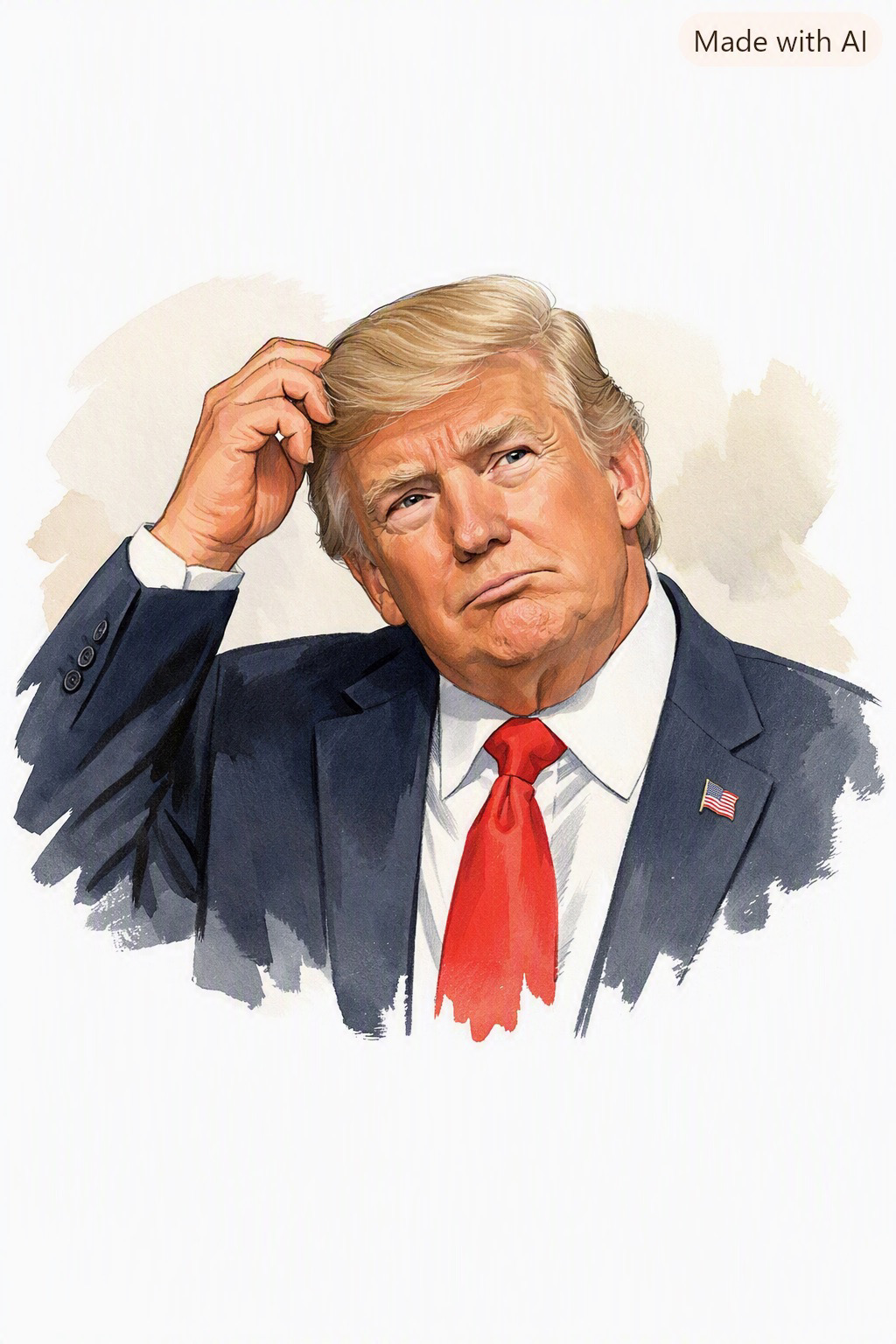
Trump is currently trapped between an intransigent and fragmented Iranian leadership, residual missile capabilities that can still inflict damage, a hostile domestic press, and energy prices high enough for opponents to shout “inflation,” even while many indicators show the broader American economy holding up better than the loudest headlines suggest. Public frustration with diplomatic yo-yoing is understandable. Many Americans sense that only a fundamental change in Tehran will actually end the conflict.
If a temporary settlement can be reached, the midterms won, and political capital restored, the option of pressing for genuine regime change can return to the table after November. That sequence is realistic even if imperfect — provided the pause itself is not allowed to become a reconstitution window.
What can happen after the midterms
A Republican success in November would give the administration freer political room. With the immediate electoral pressure eased, Trump could shift from temporary stabilization to sustained, comprehensive pressure aimed at collapsing the current power structure. That means tighter enforcement of sanctions that actually starve the IRGC of oil revenue, expanded support for Iranian opposition and diaspora networks, continued degradation of remaining military and proxy capabilities, and clearer public signaling that the United States will not accept another version of the same theocratic-military regime. Israel would almost certainly press for the same outcome. Under those conditions the regime’s internal fractures could widen; a system already dependent on fear and oil rents becomes more brittle when both are threatened at once.
The question then becomes one of timing and method: when does the moment arrive to employ intelligence, stealth, creativity, and, if necessary, more direct means to dismantle the remaining centers of power that hold fast to this system. The destruction of the regime, its economic base, and its support mechanisms has to be unleashed and complete. Half-measures have already been tried. Let what began as Operation Epic Fury become Operation Epic Economic Fury — sustained, total pressure that leaves the current structure no path back to strength.
Success is not automatic. The IRGC and remaining clerics will fight for survival. They may attempt more missile and proxy attacks, try to close the Strait again, or provoke a wider regional crisis in the hope of forcing a return to negotiated management. Let’s not provide them such an opportunity. Domestic American politics will not disappear; a hostile press and determined opposition will still frame every escalation as reckless. Yet with midterm results behind him, a president has more latitude to absorb short-term costs in pursuit of a longer-term strategic reset.
If the midterms go poorly, the constraints tighten again. A weakened congressional position would make sustained military or economic pressure harder to maintain, increasing the temptation to settle for another imperfect ceasefire that leaves the core regime intact and once more allows revenue to fund reconstitution. In that case the familiar cycle would continue.
The preferred path remains clear. Iran needs genuine regime change — an entirely new government without theocratic leadership and without the military in charge. It needs to become Persia again in spirit: more secular, less totalitarian, open to different religions, and free of mandatory Sharia rule. That outcome would be best for the Iranian people, for Israel, for the Arab states, and for global commerce. Proxies would lose their primary sponsor. The Strait of Hormuz and the Bab el-Mandeb would reopen fully. Energy and shipping costs would fall, and economies would benefit. Achieving that after the midterms — when political capital is higher, economic pressure remains unbroken, and before the regime can fully reconstitute — would be a genuine strategic and humanitarian success, whether or not any prize committee ever recognizes it.
by Thomas Balderston, Author and Blogger
 Wake Up! Wake Up!