The Existential Threat – Islam*
Islam coming to Europe and America is a concern, not for the religion itself, nor for the majority of Muslims, but for the extremist factions that have always appeared in Muslim lands, not in compliance with the moral tone of the Quran, but still passionate, violent, and murdering. They are disruptive and born of the history and ideology of the Prophet (Muhammad), the example, the early Caliphs, and their own interpretation of the tenets of Islam that they claim makes them superior. That is the existential threat.
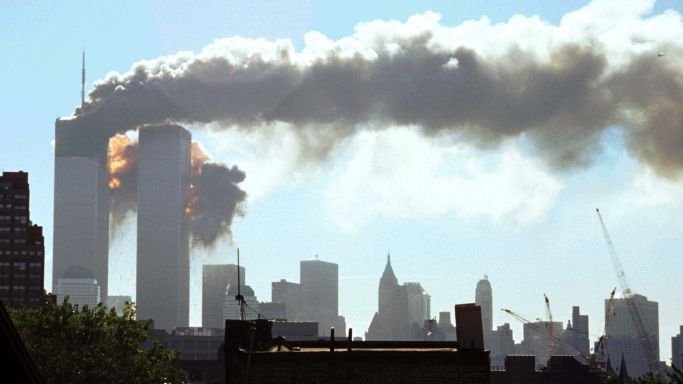
The potential for extremist elements to pose a threat as Muslim populations grow in Europe and America should be a concern to everyone, both lone wolf radicals and partnerships united in their intent to destroy, all hiding behind the curtain of religion, calling out “Allahu Akbar.” Never forget 9/11.
Majorities in Europe (around 79% median across EU countries) and North America express at least some worry about extremism in the name of Islam in their societies. This fear is tied to real events, like the Islamic State’s (ISIS) inspired or directed attacks, which have hit Europe harder than the US in recent years. Examples include the 2024 Solingen stabbing in Germany, the Moscow concert hall attack, and even a foiled plot against a Taylor Swift concert in Vienna involving teenagers radicalized online. In the US, incidents like the 2025 New Orleans attack linked to ISIS influence show the threat isn’t absent here either, though it’s less frequent.
As said, these extremist factions often draw from interpretations of Islamic history, texts, and the Prophet’s example that diverge from what many scholars see as the Quran’s “moral tone.” Groups like ISIS, al-Qaeda affiliates, or smaller cells claim ideological superiority and justify violence through selective readings of tenets like jihad, while ignoring calls for peace and justice in the same sources. This isn’t unique to Islam—extremism twists ideologies across religions and politics—but it has manifested in disruptive ways, from terrorist plots to social tensions. In Europe, where Muslim communities are larger and sometimes more alienated, this has led to higher rates of radicalization. Over 5,000 Europeans have traveled to fight in Syria and Iraq since the 2010s, compared to under 200 Americans, creating a bigger pool for potential “returnees” or inspired actors.
Factors like poor integration, distrust of authorities, and online radicalization (especially among youth) exacerbate this.
Comparing Europe and America: The threat feels more “existential” in Europe due to demographics, geography (closer to conflict zones like the Sahel, where jihadist groups are expanding), and historical integration challenges.
Cities like Paris, London, and Brussels have seen “no-go” zones debated in media, where parallel societies emerge, sometimes with informal Sharia enforcement. Concerns of civil unrest are expressed, cultural erosion is apparent, and predictions of conflicts within years are being made.
In the US, the Muslim population is smaller (about 1% vs. 5-10% in many European countries), and assimilation tends to be stronger, though pockets like Hamtramck and Dearborn, MI, or parts of Minnesota raise similar debates. But that does not suggest we should be less concerned or not proactive in stemming the growth of radical Islamism or the avenues to radicalize laid within the U.S. borders.
US jihadist attacks since 9/11 have been less lethal overall, often lone-wolf style without direct foreign ties, and authorities disrupt plots more effectively when international links are involved. Since the start of the Iran incursion (2/28/2026) there have been 4 attempts with some success by radicalized Muslims in Texas, New York, Michigan and Virginia.
Still, groups like ISIS-Khorasan (active in Afghanistan) pose a growing transnational risk, and proxies funded and inspired by the terrorist Iran continue.
It is true the vast majority of Muslims in the West reject extremism—polls consistently show this, and many actively counter it through community efforts or cooperation with law enforcement. The “existential threat” angle stems from broader migration and cultural shifts, not just violence. In Europe, rapid demographic changes have fueled political backlash, with parties like those in Austria openly addressing radical Islamism.
History, too, awakens personal feelings of the oppression towards non-Muslims that extremists when in power can cause, from pogroms to extinguish Armenians and Greeks (Smyrna) in Turkey, Hindus in India, Christians in Nigeria (and Pakistan), Jews in Iraq, the Yazidi’s, and more. Yes, there are incidents in the history of Catholicism that suggest other religious efforts to eliminate factions, but not to the extent or recently, in modern times. And when today’s population reflects upon terrorist attacks worldwide the first thought is Muslims/Islamists. Prominent Islamic hate groups freely flow from the lips of those most aware, like Hamas, Hezbollah, al-Shabbab, ISIS, the Muslim Brotherhood, and others. It is difficult to impossible to name a similar non-Muslim faction.
I do not believe I am overgeneralizing risks, or alienating peaceful Muslim communities, which could, if so, theoretically boost radical recruitment. The reason, moderate Muslims, or those opposing the biggest Islamic bully on the block, can be victims too. Muslims killing other Muslims has resulted in larger numbers of deaths than non-Muslims.
The issue is being addressed. Counterterrorism has evolved, with focus on online monitoring, international cooperation (e.g., UN efforts on preventing violent extremism), and community engagement. Vigilance is key, but so is distinguishing threats from stereotypes.
Islamic extremism is the existential threat. Using the ideology as a religious shield, as a tool of the Islamic religious zealots as tyrants or autocrats, has been proven historically. It may be a minority of Muslims that cause the fear, but when they are in power, when they speak the loudest, when they control the madrassas or mosques, than can become profiteers for their own selfishness, destroying their neighbors as needed, or indoctrinating and radicalizing the youth using financial incentives or threats of death, to reinforce their base and maintain control. Think of Iran’s IRGC or Basij, the Taliban or Al-Qaeda.
Thinking the threat is but a pimple on the whole body of Islam that with a little salve can be cured is a political uneducated mindset. Appeasing this logic is wrong. Those in a new land that will not assimilate need to be returned to their homeland.
Extremists see the modern world as a threat to their foundations. They see America, the Western world, as influencers that need to be stopped. Progress cannot be curtailed, and as a result is a threat to those entrenched in their 7th century tenets without the ability to adapt and adopt growth. That thinking was part of Osama bin Laden’s manifesto, and is inherent in the logic of the extremest authorities. It is being taught and supported by wealthy factions, Imams, Mufti’s and others revered and respected as Islamic scholars.
It only takes a few extremist ideologues blinded by biased media, militants, greed, and power obsessed leadership, even coerced, to cause a great deal of damage. And if given a political power base, enabled by uneducated innocents or sympathizers, a regime dominating its citizens and reigning terror on the world, even their neighbors, can evolve and cause over 47 years of suffering, hatred and death.
By Thomas W. Balderston
Author and blogger.
* With input through an exchange with the AI Grok generator.
 Wake Up! Wake Up!